
Primary Antibody Matched Pairs

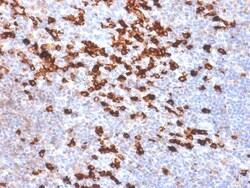
Biotium Human Kappa Light Chain (B-Cell Marker) (IGKC/1999R), 0.2mg/mL
This MAb is specific to kappa light chain of immunoglobulin and shows no cross-reaction with lambda light chain or any of the five heavy chains. In mammals, the two light chains in an antibody are always identical, with only one type of light chain, kappa or lambda. The ratio of Kappa to Lambda is 70:30. However, with the occurrence of multiple myeloma or other B-cell malignancies this ratio is disturbed. Antibody to the kappa light chain is reportedly useful in the identification of leukemias, plasmacytomas, and certain non-Hodgkin's lymphomas. Demonstration of clonality in lymphoid infiltrates indicates that the infiltrate is malignant.Primary antibodies are available purified, or with a selection of fluorescent CF Dyes and other labels. CF Dyes offer exceptional brightness and photostability. Note: Conjugates of blue fluorescent dyes like CF405S and CF405M are not recommended for detecting low abundance targets, because blue dyes have lower fluorescence and can give h

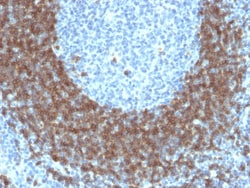
Biotium CD79b (B-Cell Marker)(IGB/1842), CF640R conjugate, 0.1mg/mL
CD79 (also designated Ig chains, designated CD79B or B29. The B cell antigen receptor complex (BCR) is formed by the association of CD79 with a membrane immunoglobulin, such as IgM or IgD. The membrane immunoglobulins IgM and IgD achieve surface expression and antigen presentation function in response to CD79 association. The cytoplasmic tails of both CD79A and CD79B contain an ITAM (immuno-receptor tyrosine-based activation) motif, which acts to initiate the BCR signaling reactions by binding to and activating tyrosine kinases. Primary antibodies are available purified, or with a selection of fluorescent CF Dyes and other labels. CF Dyes offer exceptional brightness and photostability. Note: Conjugates of blue fluorescent dyes like CF405S and CF405M are not recommended for detecting low abundance targets, because blue dyes have lower fluorescence and can give higher non-specific background than other dye colors.
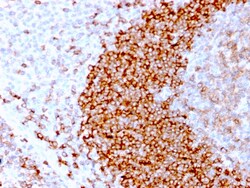
Biotium CD79b (B-Cell Marker)(IGB/3170R), CF594 conjugate, 0.1mg/mL
CD79 (also designated Ig chains, designated CD79B or B29. The B cell antigen receptor complex (BCR) is formed by the association of CD79 with a membrane immunoglobulin, such as IgM or IgD. The membrane immunoglobulins IgM and IgD achieve surface expression and antigen presentation function in response to CD79 association. The cytoplasmic tails of both CD79A and CD79B contain an ITAM (immuno-receptor tyrosine-based activation) motif, which acts to initiate the BCR signaling reactions by binding to and activating tyrosine kinases. Primary antibodies are available purified, or with a selection of fluorescent CF Dyes and other labels. CF Dyes offer exceptional brightness and photostability. Note: Conjugates of blue fluorescent dyes like CF405S and CF405M are not recommended for detecting low abundance targets, because blue dyes have lower fluorescence and can give higher non-specific background than other dye colors.
Miltenyi Biotec, Inc. CD55 (DAF)-APC, human, REAL510, 30 tests
Identification and enumeration of CD55 (DAF)+ cells by flow cytometry.
This product is subject to the following: Miltenyi Biotec, Inc. Terms and Conditions of Sale For Products and Services

Medchemexpress LLC S100A9 Human His 10ug

S100A9 Protein, Human (His) is a recombinant fragment of the human S100A9 calcium-binding protein supplied lyophilized for research use. The protein contains an N-terminal 6xHis affinity tag, is expressed in Escherichia coli, and is provided with recommended formulation and storage guidance for biochemical and immunological assays.
- Recombinant human S100A9 with N-terminal His tag.
- High purity (>95%) as determined by reducing SDS-PAGE.
- Supplied lyophilized with stabilizers to support storage.
- Suitable for biochemical and immunological research applications.
- Recommended reconstitution at 100 μg/mL or higher and aliquot storage at -20°C/-80°C.
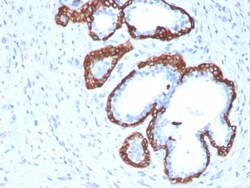
Biotium Cytokeratin 5 (KRT5) (Basal, Myoepithelial & Mesothelial Cell Marker)(KRT5/3594), Biotin conjugate, 0.1mg/mL
This MAb recognizes a protein of 58 kDa, which is identified as Cytokeratin 5 (KRT5). This type II cytokeratin is specifically expressed in the basal layer of the epidermis with family member KRT14. Antibodies to KRT5 identify basal cells of squamous and glandular epithelia, myoepithelia, and mesothelium. Anti-cytokeratin 5 has been reported useful in the differential diagnosis of metastatic carcinoma in the pleura versus epithelioid mesothelioma. Almost all squamous cell carcinomas, half of transitional carcinomas, and many undifferentiated large cell carcinomas express. Anti-KRT5, along with anti-p63, affords a high sensitivity and specificity for squamous differentiation. Myoepithelial cells of the breast, glandular epithelia, and basal cells of the prostate are labeled with anti-KRT5. Primary antibodies are available purified, or with a selection of fluorescent CF Dyes and other labels. CF Dyes offer exceptional brightness and photostability. Note: Conjugates of blue f
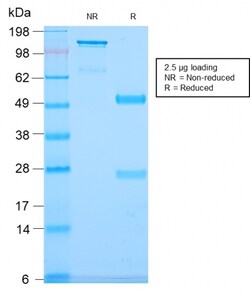
Biotium CD79b (B-Cell Marker)(IGB/2940R), CF594 conjugate, 0.1mg/mL
CD79 (also designated Ig chains, designated CD79B or B29. The B cell antigen receptor complex (BCR) is formed by the association of CD79 with a membrane immunoglobulin, such as IgM or IgD. The membrane immunoglobulins IgM and IgD achieve surface expression and antigen presentation function in response to CD79 association. The cytoplasmic tails of both CD79A and CD79B contain an ITAM (immuno-receptor tyrosine-based activation) motif, which acts to initiate the BCR signaling reactions by binding to and activating tyrosine kinases. Primary antibodies are available purified, or with a selection of fluorescent CF Dyes and other labels. CF Dyes offer exceptional brightness and photostability. Note: Conjugates of blue fluorescent dyes like CF405S and CF405M are not recommended for detecting low abundance targets, because blue dyes have lower fluorescence and can give higher non-specific background than other dye colors.
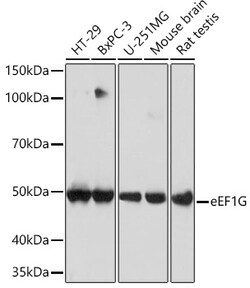
ABclonal Technology eEF1G Rabbit mAb
This gene encodes a subunit of the elongation factor-1 complex, which is responsible for the enzymatic delivery of aminoacyl tRNAs to the ribosome. This subunit contains an N-terminal glutathione transferase domain, which may be involved in regulating the assembly of multisubunit complexes containing this elongation factor and aminoacyl-tRNA synthetases.

Medchemexpress LLC S100A9 Human His 250ug
Recombinant human S100A9 (His) is a lyophilized, N-terminal 6xHis-tagged fragment of human S100A9 expressed in E. coli. Supplied with >95% purity and a defined amino acid sequence (T2-P114), it is suitable for biochemical characterization, receptor binding studies (TLR4/MD2, RAGE), structural analysis, and antibody development. Store frozen and follow reconstitution guidance to maintain activity.
- High purity (>95%) as determined by reducing SDS-PAGE.
- N-terminal 6xHis tag for affinity purification and detection.
- Expressed in E. coli for consistent, scalable production.
- Lyophilized formulation with stabilizers for long-term storage.
- Supplied with a defined amino acid sequence (T2-P114).
- Suitable for biochemical assays, receptor binding, and antibody generation.
- Manufacturer recommends reconstitution to ≥100 μg/mL and aliquot freezing for storage.

Sino Biological Recombinant Human PTPN5 Protein (full length, GST Tag), Active 10
Recombinant full-length human PTPN5 was expressed by baculovirus in Sf9 insect cells using an N-terminal GST tag.

Biotium Perforin-1 (Pore Forming Protein) (Apoptosis Marker) (PRF1/2468), CF405S conjugate, 0.1mg/mL
Perforin is a pore-forming protein that leads to osmotic lysis of the target cells and subsequently enables granzymes to enter the target cells and activate apoptosis. Perforin has structural and functional similarities to complement component 9 (C9). Like C9, this protein creates transmembrane tubules and is capable of lysing non-specifically a variety of target cells. It is one of the main cytolytic proteins of cytolytic granules, and is known to be a key effector molecule for T-cell- and natural killer-cell-mediated cytolysis. Defects in this gene cause familial hemophagocytic lymphohistiocytosis type 2 (HPLH2), a rare and lethal autosomal recessive disorder of early childhood. The expression of perforin is reportedly upregulated in activated CD8 T-cells, natural killer cells and some CD4 T-cells.Primary antibodies are available purified, or with a selection of fluorescent CF Dyes and other labels. CF Dyes offer exceptional brightness and photostability. Note: Conjugates of
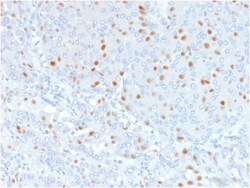
Biotium Annexin A1 / (Hairy Cell Leukemia Marker)(6E4/3), 0.2mg/mL
Annexin A1 belongs to the annexin family. It plays a role in glucocorticoid-mediated down-regulation of the early phase of the inflammatory response. In resting conditions Annexin A1 is localized to the cytoplasm. Upon activation it is mobilized to the membrane and secreted. Annexin A1 and contains 4 annexin repeats. A pair of annexin repeats may form one binding site for calcium and a phospholipid. Expression of the ANXA1 gene is upregulated in hairy cell leukemia (HCL). Detection of ANXA1 provides a simple, highly sensitive and specific assay for diagnosing HCL. Annexin A1 has also been found to be protective against DNA damage induced by heat in breast cancer cells, suggesting it is involved in tumor suppressive and protective activities, and also is associated with treatment resistance. Primary antibodies are available purified, or with a selection of fluorescent CF Dyes and other labels. CF Dyes offer exceptional brightness and photostability. Note: Conjugates of blue fluo
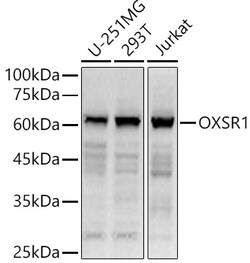
ABclonal Technology OXSR1 Rabbit pAb
The product of this gene belongs to the Ser/Thr protein kinase family of proteins. It regulates downstream kinases in response to environmental stress, and may play a role in regulating the actin cytoskeleton.
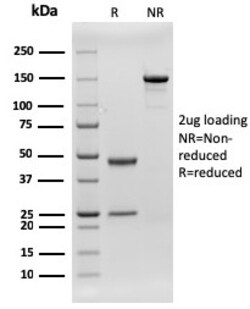
Biotium CD79b (B-Cell Marker)(rIGB/1842), CF740 conjugate, 0.1mg/mL
CD79 (also designated Ig chains, designated CD79B or B29. The B cell antigen receptor complex (BCR) is formed by the association of CD79 with a membrane immunoglobulin, such as IgM or IgD. The membrane immunoglobulins IgM and IgD achieve surface expression and antigen presentation function in response to CD79 association. The cytoplasmic tails of both CD79A and CD79B contain an ITAM (immuno-receptor tyrosine-based activation) motif, which acts to initiate the BCR signaling reactions by binding to and activating tyrosine kinases. Primary antibodies are available purified, or with a selection of fluorescent CF Dyes and other labels. CF Dyes offer exceptional brightness and photostability. Note: Conjugates of blue fluorescent dyes like CF405S and CF405M are not recommended for detecting low abundance targets, because blue dyes have lower fluorescence and can give higher non-specific background than other dye colors.
Biotium S100A9(47-8D3), 0.2mg/mL
This MAb stains the cytoplasm of macrophages and histiocytes in hematopoietic organs, Kupffer's cells of the liver and Langerhan's cells of the skin. It also stains the mantle zone B-lymphocytes of the lymph node and spleen, spermatogonia, and chief cells of the stomach. S100A9 is expressed by macrophages in acutely inflamed tissues and in chronic inflammation. It is detected in peripheral blood leukocytes, in neutrophils and granulocytes. It is present at sites of vascular inflammation. S100A9 is also expressed in epithelial cells constitutively or induced during dermatoses. S100A9 is a Calcium-binding protein. It has antimicrobial activity towards bacteria and fungi. It is important for resistance to invasion by pathogenic bacteria. It up-regulates transcription of genes that are under the control of NF-kappa-B. S100A9 plays a role in the development of endotoxic shock in response to bacterial lipopolysaccharide (LPS). It promotes tubulin polymerization when unphosphorylate